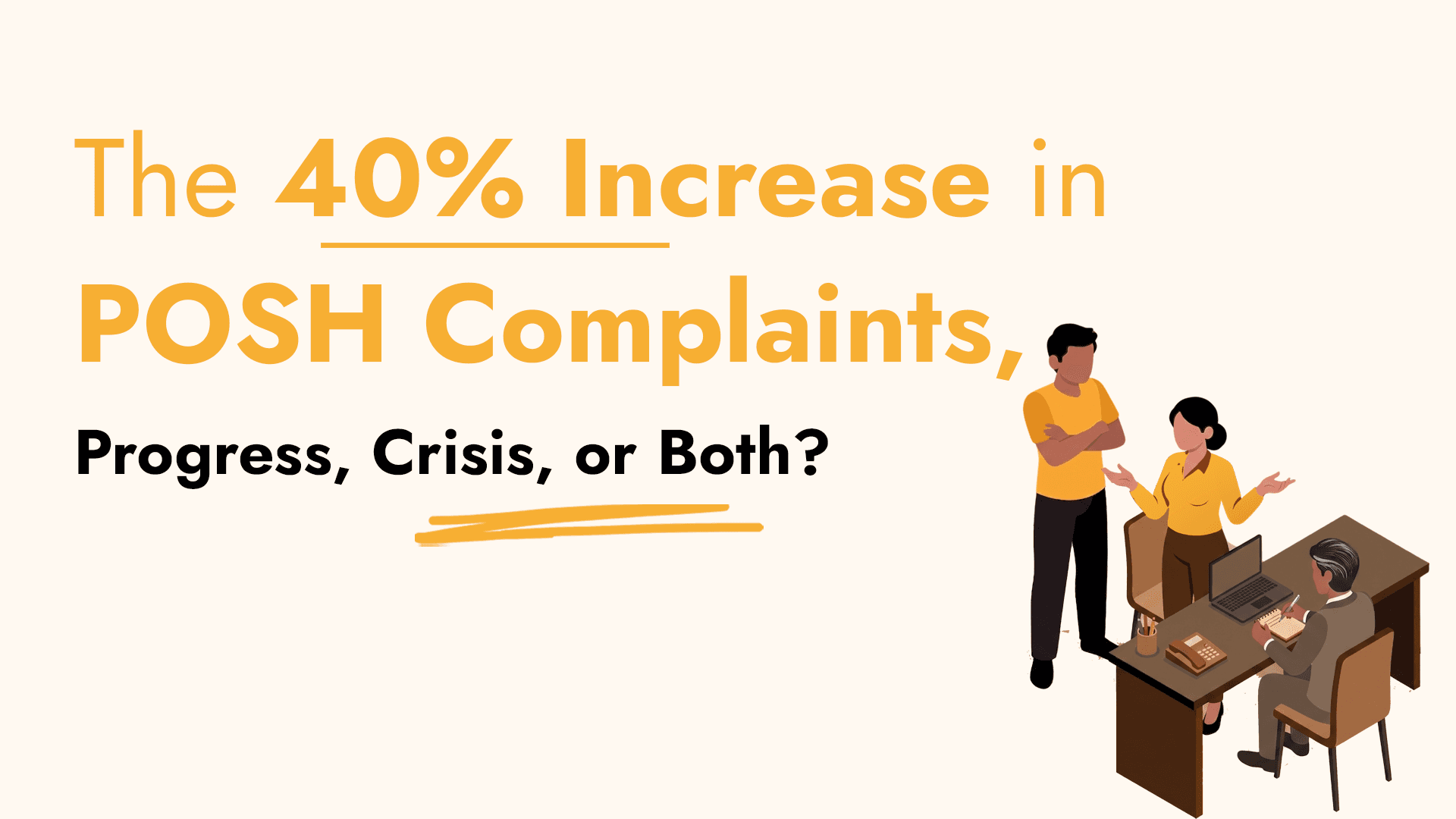
POSH complaints filed across Indian companies rose by roughly 40 per cent in FY24. The figure made headlines. What the headlines did not clarify was whether we should celebrate or worry.
Honestly? Both. Simultaneously.
Sochne wali baat: More complaints could mean more harassment, Or more women willing to report. The truth lies in the middle, uncomfortable, mixed, and incomplete.
Awareness has grown. Fear has decreased slightly. Some workplaces have genuinely made it easier to speak up. That is progress. But progress is not the same as arrival. Thousands of companies still treat POSH compliance as a paper exercise. ICCs exist to satisfy auditors, not to serve complainants. Training is a calendar event, not a culture shift.
The 2025 amendment to the Companies Act now requires listed companies to disclose, in their annual reports, the number of POSH complaints received, pending, and resolved. Transparency is welcome. But numbers on a page reveal nothing about whether investigations were fair, whether complainants faced retaliation, or whether the resolution actually changed anything in the office where it happened.
Globally, countries such as Australia and the UK have moved towards positive duty models, where employers must proactively prevent harassment, not merely respond to complaints. India's framework remains reactive: something happens, someone reports, and the machinery activates. A proactive model would require regular risk assessments, climate surveys, and accountability even when no complaint is filed.
Zara sochiye: Waiting for someone to be harassed before acting is like installing a fire alarm after the building has burned. Prevention requires investment before the incident.
The gap the law has not closed: LGBTQ+ workers. The POSH Act uses the term "aggrieved woman," which excludes men and non-binary individuals from formal protection. A trans woman facing harassment, a gay man targeted with sexual remarks, and a non-binary employee subjected to invasive questions about their body, none of them are explicitly covered. Some organisations have extended their internal policies to be gender-neutral. The statute itself has not caught up.
That is not a footnote. It is a population left without legal recourse.
The mental health cost of harassment also deserves the recognition it rarely receives. Harassment does not end when the ICC closes the file. Anxiety, depression, trust issues, difficulty concentrating, disrupted sleep, these can persist for months or years after the last incident. The POSH Act mandates no mental health support for complainants. Progressive companies offer counselling as part of the resolution. Most do not.
Think about this: What would a genuinely safe Indian workplace look like? One where the ICC is trusted, not feared. Where men and women train together. Where reporting does not end a career. Where every person, regardless of gender, orientation, or employment status, has equal protection.
We are not there yet. But knowing the destination is how you start walking towards it. Every conversation like this one is a step.
A Word for Parents
Your children are entering workplaces that are better than those of your time. The rules have improved. The culture is still catching up. Talk to them, daughters and sons equally, about what respect looks like in practice. What they should expect. What they should refuse to tolerate. And what they should do when they witness something wrong, not just when it happens to them.
Here is what stays: The workplace your child deserves will not build itself. But every conversation, every complaint filed, and every bystander who speaks up brings it one step closer.
TSSF team is eager to hear from you, write to us at info@sunitisolomon.org or call us at 044-28363200.
#POSHAct #WorkplaceHarassment #SafeWorkplaces #WomenAtWork #KnowYourRights #POSHAwareness #GenderEquality #SpeakUpCulture #WorkplaceSafety #CorporateCulture #EndWorkplaceHarassment #MentalHealthMatters #LGBTQInclusion #InclusiveWorkplaces #ICC #EmployeeRights #RespectAtWork #SupportSurvivors #LeadershipMatters #HarassmentFreeWorkplace #BystanderIntervention #WorkplaceEthics #PsychologicalSafety #AwarenessMatters #BelieveWomen #PreventionOverReaction #SocialChange #TSSF #EqualityAtWork #FutureOfWork