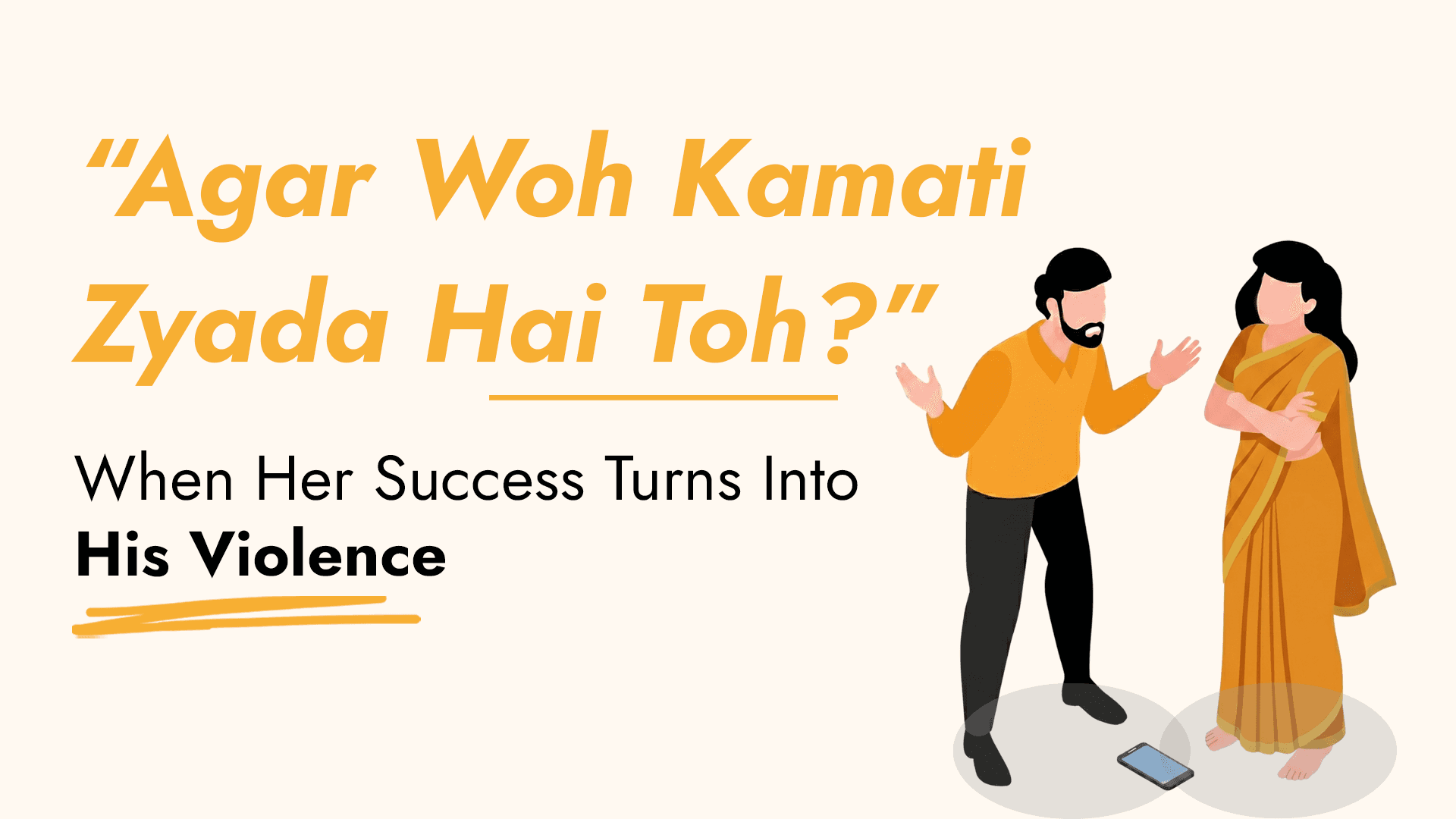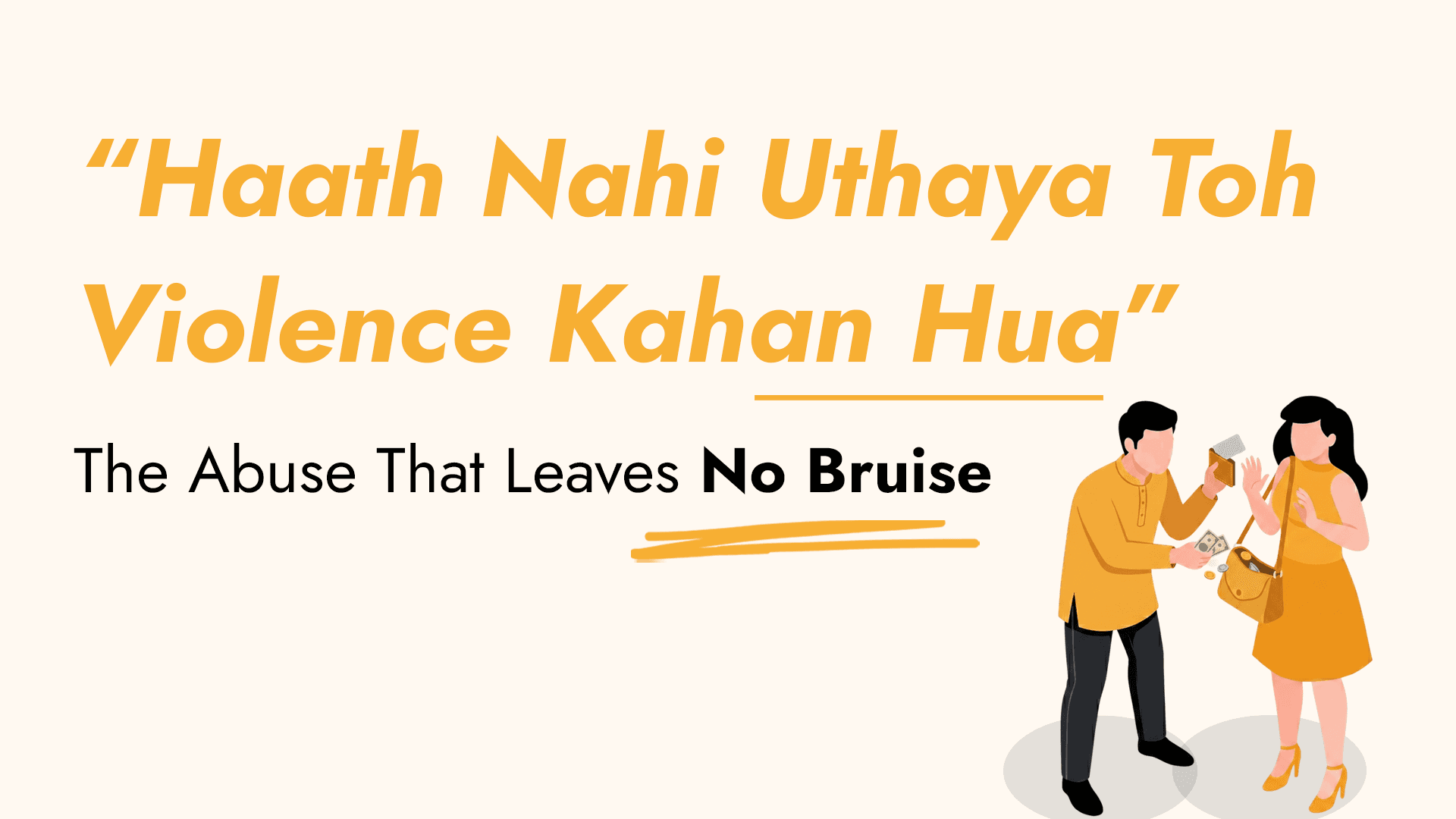
This blog fills a significant gap in how India understands intimate partner violence. For most people, domestic violence means physical assault - slaps, punches, visible injuries. But the Protection of Women from Domestic Violence Act 2005 recognises economic, emotional, verbal, and psychological abuse as violence. Millions of women live under financial control, constant belittling, digital surveillance, and social isolation - and lack the language to call it what it is. This blog gives them that language. It is for every woman who has been told, "He doesn't hit you, so what's the problem?"
Woh roz uska phone check karta hai. Uska salary apne account mein transfer karwa leta hai. Usse uski maa se phone pe baat karne ke liye "permission" leni padti hai. Woh usse kabhi nahi maarta. Kabhi haath nahi uthata. Isliye - woh khud bhi nahi jaanti ki jo uske saath ho raha hai, uska ek naam hai. Aur woh hai - intimate partner violence.
Violence ka matlab sirf chhot nahi hota. Control bhi violence hai. Aur control ke nishaan sharir pe nahi, zindagi pe dikhte hain.
The DV Act 2005 sets this out clearly. Section 3 defines domestic violence to include not only physical abuse but also emotional abuse, insults, ridicule, name-calling, and constant accusations of infidelity. It includes economic abuse, denying access to finances, preventing her from working, and taking her earnings. It includes verbal abuse - threats and humiliation in front of others. These are not minor additions to the law. They are the core of it. Yet over twenty years after the Act was passed, most Indians, including many lawyers and police officers - still associate domestic violence only with being hit.
Kanoon ne bahut pehle maan liya ki emotional abuse bhi violence hai. Society abhi bhi nahi maanti.
Let's talk about economic abuse, probably the most invisible form of IPV in India. A study in Mumbai's informal settlements found that 23% of married women experienced economic abuse - salary confiscation, denial of property rights, loans taken in their names without consent, and transaction alerts routed to the husband's phone so he monitors every rupee she spends. But this isn't limited to informal settlements. In middle-class and affluent households, the patterns are identical - just better disguised. The joint account where only he has the debit card. The "family budget" where she accounts for every auto fare but he never explains his expenses. The gold she brought as streedhan that was "invested" and never returned.
Paisa dena aur paisa control karna - dono mein farak hai. Agar usse apne hi kamaye hue paise kharchne ke liye poochna padta hai - that is not partnership. That is control.
There is another form of violence this blog must name - because almost nobody in India does. Sexual coercion within marriage. Forced sex by a husband. India still does not criminalise marital rape - the law explicitly exempts it unless the wife is under 18. But the DV Act 2005 recognises sexual abuse within marriage as domestic violence. A woman forced into sex by her husband - against her will, after she has said no, when she is unwell, when she is asleep - is experiencing intimate partner violence. The fact that a marriage certificate exists does not convert coercion into consent. Shaadi ka matlab yeh nahi ki uski body pe uska haq khatam ho gaya.
"Woh mera husband hai" - yeh jawab nahi hai. Consent shaadi ke baad bhi zaroori hai. Har baar. Bina exception.
Digital surveillance has become a new frontier of IPV that very few in India talk about. Phone location tracking on Google Maps - shared "for safety" but used to monitor every movement. WhatsApp messages checked every night before sleep. Instagram followers scrutinised. Call logs inspected. "Kisko call kiya tha 4 baje?" said in a tone that is not curiosity but interrogation. The phone, which should be a tool of independence, has become the most efficient instrument of control in modern Indian marriages.
Agar aapko apna phone apne hi partner se chhupana padta hai - toh aap safe nahi hain. Aap surveilled hain.
Social isolation is another form that hides in plain sight. "Tumhari woh friend mujhe pasand nahi." "Tumhare office ke log tumhe bigaad rahe hain." "Apne maayke jaane ki kya zaroorat hai har maheene?" Slowly, methodically, her world shrinks. Friends stop calling because she never answers. Family visits become rarer. Colleagues stop inviting her because she always says no. And one day she looks around and realises - the only person left in her life is the one controlling it.
Isolation ek baar mein nahi hota. Yeh dheere-dheere hota hai. Itna dheere ki pata hi nahi chalta - jab tak bahut der na ho jaaye.
And then there is gaslighting - perhaps the cruelest form, because it makes the victim doubt her own mind. "Aisa kuch hua hi nahi." "Tum pagal ho rahi ho." "Tumhe hamesha drama karna hota hai." Over months and years of being told that her perception is wrong, her memory is faulty, and her feelings are exaggerated, she begins to believe it. She stops trusting herself. She starts thinking maybe he's right, maybe she is the problem. That is the point of gaslighting. It doesn't break your body. It breaks your ability to know what is real.
Jab koi insaan apni khud ki sochi hui baat par bharosa na kar sake - samajh lo kisi ne uska bharosa tod diya hai.
Here's why naming all these forms of violence matters. When a woman lacks the language to describe what's happening to her, she can't seek help. She goes to her mother and says, "woh mujhe baat nahi karne deta kisi se", and her mother says, "arey, possessive hai, care karta hai." She tells her friend, "usse meri salary apne account mein chahiye", and the friend says, "joint finances toh normal hai." Every form of abuse that leaves no bruise gets reframed as love, concern, care, or tradition. The DV Act gives women the right to seek protection orders against emotional and economic abuse. She can approach a Protection Officer. She can file a Domestic Incident Report. She does not need visible injuries to prove violence. But she needs to know this. And the people around her need to know this.
Violence woh nahi hai jo dikhta hai. Violence woh hai jo todta hai - chahe andar se hi kyun na ho.
TSSF strives to build an environment of equity and addressing intimate partner violence of any type is a critical first step - we are with you - please do call us at 044-28363200 or email us at info@sunitisolomon.org
#IntimatePartnerViolence #DomesticViolenceAwareness #BreakTheSilence #FamilyAndViolence #GenderJustice #WomenSafety #StopDomesticViolence #Patriarchy #DowryViolence #EmotionalAbuse #ViolenceAgainstWomen #SpeakUp #SupportSurvivors #EndTheCycle #WomenRights #SocialJustice #ToxicFamilySystems #MentalHealthAwareness #SafeHomes #BelieveWomen #IndiaAgainstViolence #EqualityMatters #CommunityCare #FeministVoices #ChangeTheNarrative #NotJustAdjustment #ListenToWomen #HumanRights #TSSF