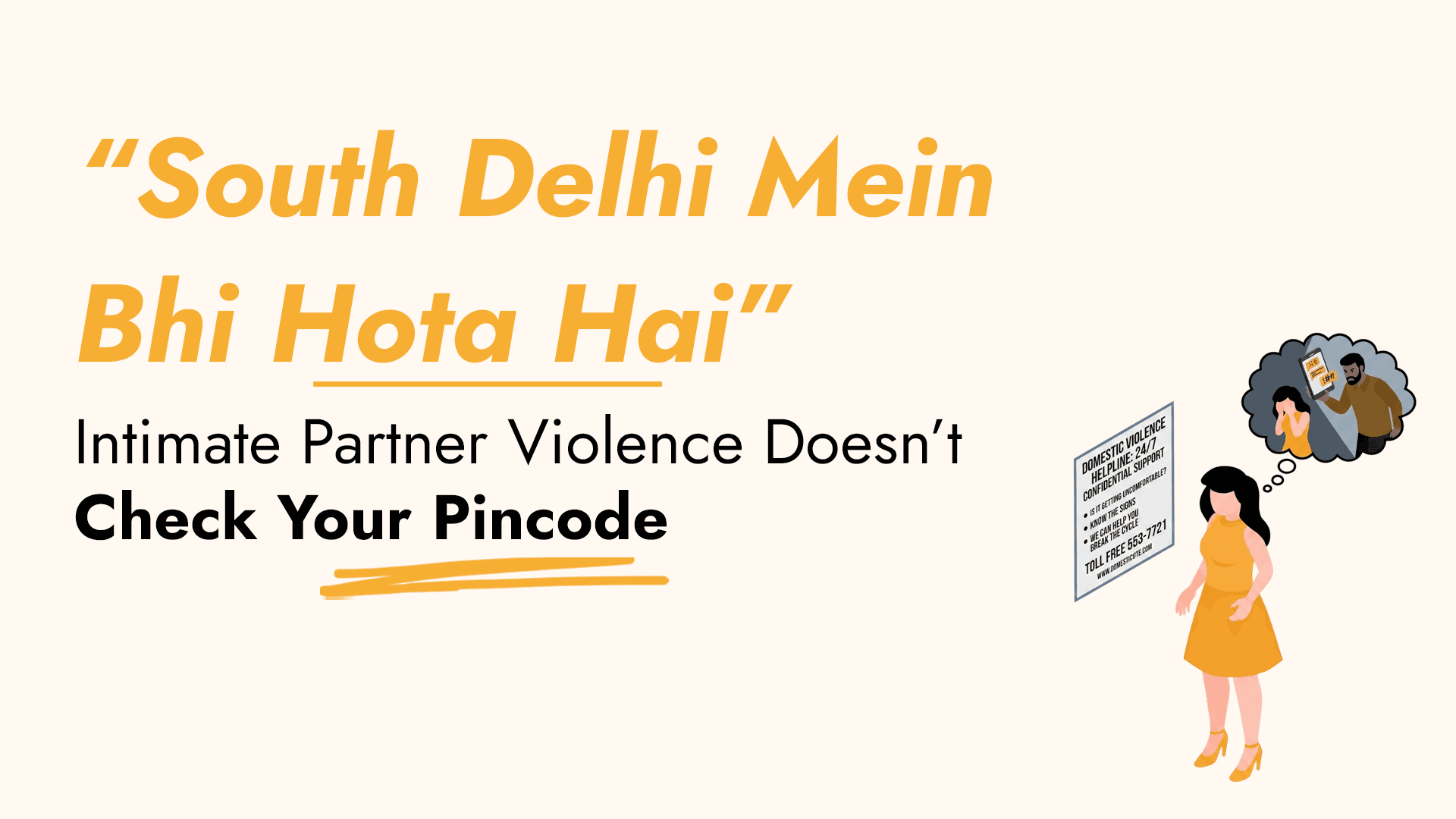
India's IPV conversation is trapped in a class frame, the assumption that domestic violence is a problem of the poor, the uneducated, the rural. Yet Indian studies show a 40.5% prevalence of IPV even among educated urban women. In affluent homes, abuse is better hidden, the social cost of disclosure is higher, and support systems are designed for a different kind of victim. This blog breaks the class ceiling that IPV awareness in India refuses to crack. It is for every educated, well-off woman who looked at a domestic violence helpline poster and thought, "yeh mere liye nahi hai."
She has a master's degree from a top university. Her husband is a senior executive. They live in a gated community with a swimming pool and a clubhouse. Their children attend an international school. Their Instagram shows holidays in Bali, anniversary dinners, and birthday surprises. Their neighbours think they are the perfect couple. Last Tuesday night, he threw a plate at her because the food was cold. She cleaned it up before the maid arrived in the morning.
Abuse doesn't care about your address. It happens in 2BHK flats and in farmhouses. The only difference is that the farmhouse has thicker walls.
There's a deep, stubborn assumption in Indian society that IPV is a problem of poverty, illiteracy, and rural backwardness. Every awareness campaign features the same visual, a woman in a torn sari with a bruised face, usually shown in a dimly lit jhuggi. That image is real. That woman exists, and she needs help. But that image has also created a class filter so thick that millions of educated, affluent women who are being abused every day cannot see themselves in it.
Jab awareness campaign sirf ek tarah ki aurat ko dikhata hai, toh baaki sab auraton ko message jaata hai ki "yeh tumhare baare mein nahi hai." Aur woh chup reh jaati hain.
A study in a South Indian city found that the prevalence of intimate partner violence among educated women was 40.5%. Not four percent. Forty percent. Physical assault and sexual coercion were present. Psychological abuse, constant criticism, belittling, monitoring, threatening, was the most common form. Reporting was virtually zero. In an affluent, educated household, the stakes of disclosure are astronomical. Her social circle will be "shocked." Her family will say "but he's such a nice man." The divorce will become gossip at the next kitty party. Her children's school will hear.
In poor homes, the barrier to reporting is survival, the loss of shelter, food, and income. In rich homes, the barrier is reputation. Both are equally real. Both keep women trapped.
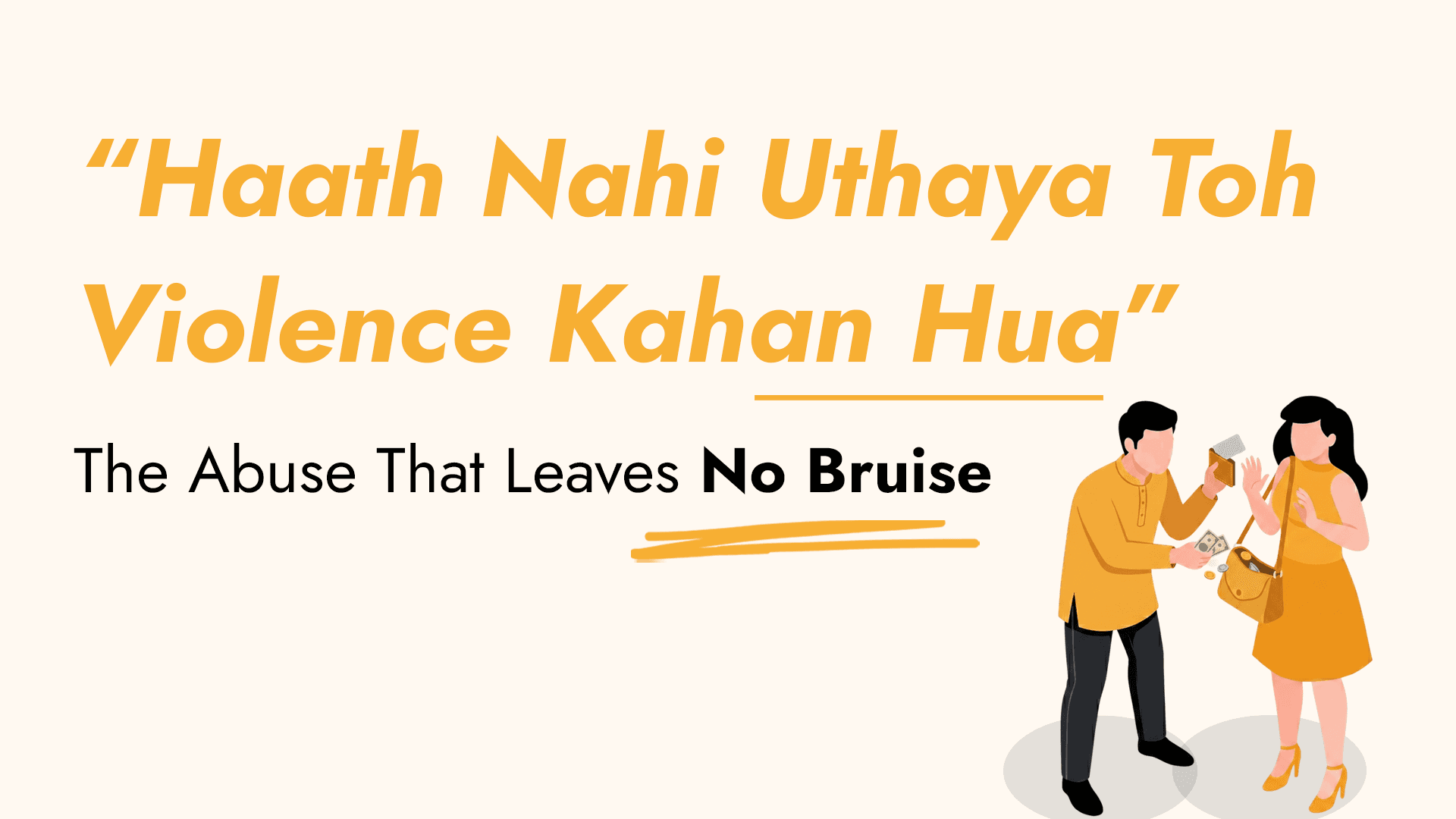
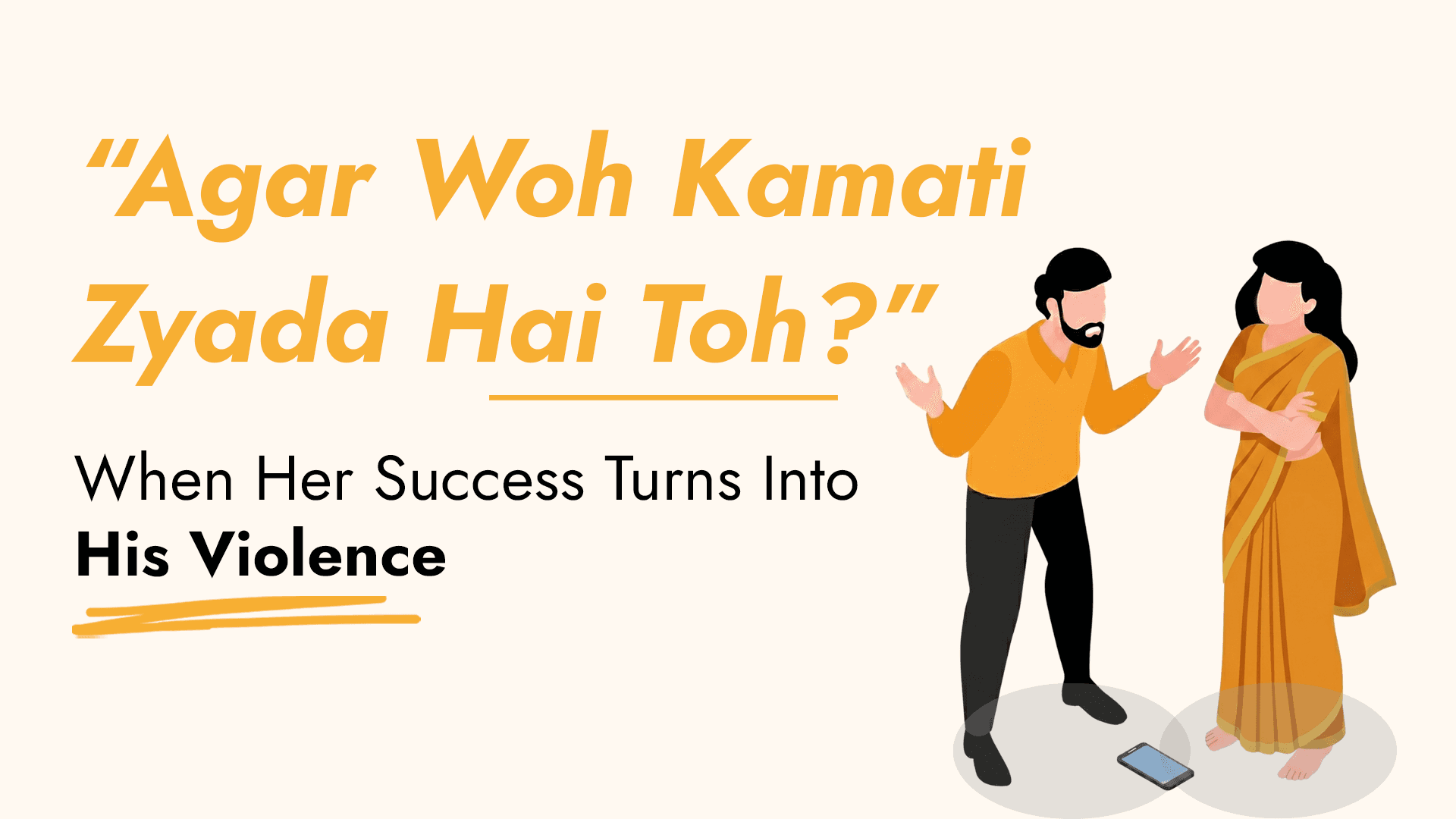
The forms of abuse in affluent homes are often sophisticated and harder to identify. He doesn't hit, he threatens to take the children if she leaves, because he can afford better lawyers. He doesn't yell, he uses a calm, cutting tone that dismantles her confidence piece by piece over years. He doesn't deny her money, he gives her a credit card but reviews every transaction like an auditor. He doesn't stop her from working, he makes her working life so difficult through emotional warfare at home that she eventually quits. Every tactic is deniable. Every pattern is invisible to outsiders.
Ameer gharon mein violence ka form alag hota hai. Woh subtle hai, sophisticated hai, lekin utna hi destructive.
Legal intimidation is a weapon that affluent abusers wield with particular effectiveness. "Agar tune kuch kiya toh main desh ke best lawyers hire karunga. Bacche mujhe milenge. Tujhe kuch nahi milega." "Tera career khatam kar dunga, ek phone call lagta hai bas." "Meri family ko jaanti hai, police meri taraf hai." The woman knows he's not bluffing. He has the resources, the connections, and the confidence of a man who has operated with impunity his whole life. For her, the legal system doesn't feel like protection, it feels like another arena where he has the advantage. And so she stays. Not because she's weak. Because she has calculated the odds, and they are against her.
Jab abuser ke paas paisa hai, connections hain, lawyers hain, toh victim ke liye kanoon ki suraksha nahi, balki ek aur ladaai ban jaata hai.
There are silent witnesses in these homes who are never spoken of. The domestic help. The driver who drops the children at school and hears the fighting through the bedroom door. The cook who sees her swollen eyes every morning. The maid who cleans up the broken glass. They know everything. They say nothing, because their jobs depend on it, because their employers are powerful, because they have been told, explicitly or implicitly, that "ghar ki baat ghar mein". In affluent Indian households, the staff become an unwilling infrastructure of silence, present at every scene, complicit in none, and unable to speak.
Ghar mein kaam karne wale sab jaante hain. Lekin unki chuppi khareed li jaati hai, ya toh paison se, ya darr se.
Friends and family in affluent circles often become the most effective silencers. "But he provides so well for you." "He took you to Europe last month, how bad can it be?" "All men have anger issues, at least yours doesn't drink." Actually, let's talk about drinking. Alcohol-fuelled violence in affluent homes is staggeringly common, yet it's dressed up as "social drinking that got out of hand." Saturday night parties, business dinners, farmhouse weekends, and then he comes home and the real evening begins. But because it's single malt and not country liquor, nobody calls it what it is.
If you are this woman, reading this in your air-conditioned room, on your own phone, in a house that looks perfect from the outside, know this. What is happening to you is real. It is not "just a bad marriage." It is not the price you pay for a good life. You have resources many women don't, a lawyer you can call, savings you can access, a friend with a spare room. Use them. And having a good education and a nice house does not disqualify you from being a victim or from asking for help.
Aapka pincode aapki safety decide nahi karta. Aur aapka bank balance aapke dard ko invalid nahi banata. Help maangna aapka haq hai, chahe aap kisi bhi colony mein rehti hon.
TSSF strives to build an environment of equity and addressing intimate partner violence of any type is a critical first step - we are with you - please do call us at 044-28363200 or email us at info@sunitisolomon.org
#DomesticViolenceAwareness #IntimatePartnerViolence #AbuseHasNoClass #EmotionalAbuse #PsychologicalAbuse #BreakTheSilence #ViolenceBehindClosedDoors #WomenSafety #HealthyRelationships #EndDomesticViolence #ToxicRelationships #AffluentAbuse #UrbanIndia #WomenRights #PatriarchyHurts #SupportSurvivors #ViolenceIsNotLove #Gaslighting #EconomicAbuse #LegalAbuse #SafeHomes #SpeakUp #HiddenAbuse #StopVictimBlaming #MentalHealthAwareness #IndianWomen #NoExcuseForAbuse #YourPainIsValid #TSSF #SocialChange