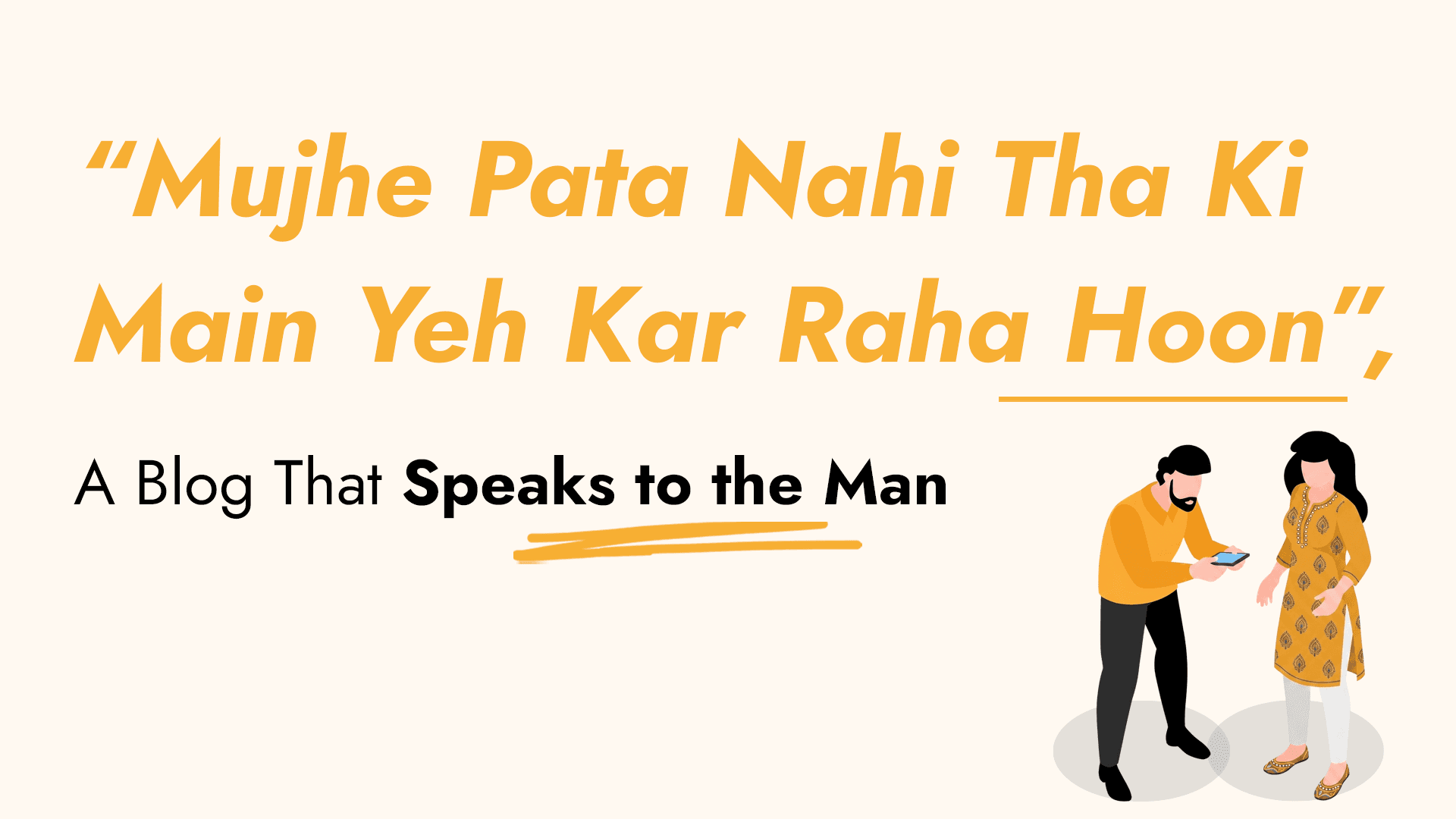
Every IPV blog, every awareness campaign, every helpline message in India is addressed to women. Nobody speaks to the man who is being abusive, not to vilify him, but to help him see what he is doing. This blog fills that absence. It asks uncomfortable questions in plain language. It names controlling behaviours that many men don't recognise as abuse. It is not an attack. It is a mirror. And it is written for the man who might, just might, be willing to look into it.
This blog is for you. Yes, you. The man who has never hit his wife. The man who says, "maine toh kabhi haath nahi uthaya." The man who believes he is a good husband because he is not physically violent. But hold on. There are some questions here. They will make you uncomfortable. Read them anyway.
Uncomfortable feel karna galat nahi hai. Galat yeh hai ki uncomfortable feel karke bhi kuch nahi badlein.
Do you check her phone? At night, when she's asleep, or during the day, when she's in the washroom? Do you know her passcode, but she doesn't know yours? Have you ever said, "What are you hiding on your phone that you can't show me?" Do you believe this is your right, because you are her husband? Many men do. They don't see it as surveillance. They see it as concern. "I just want to know what's going on." But concern asks. Control demands. And when the demand comes with anger, suspicion, and the threat of a confrontation, that is not love. That is monitoring.
Checking your partner's phone is not trust. It is surveillance. Aur surveillance ka doosra naam control hai.
Has she stopped talking to her family as much, because you don't like them? Is there an old friend she used to see regularly who has quietly disappeared from her life? When she goes to an office party, do you ask so many questions that the next time she thinks twice before going? Have you ever said, "tujhe mere bina jaane ki kya zaroorat hai?" Isolation doesn't happen in one dramatic move. It happens through small, daily restrictions that slowly shrink her world until the only person left in it is the one controlling it.
If your wife's world is narrowing to just you, that is not closeness. That is isolation. And isolation is a documented form of intimate partner violence.
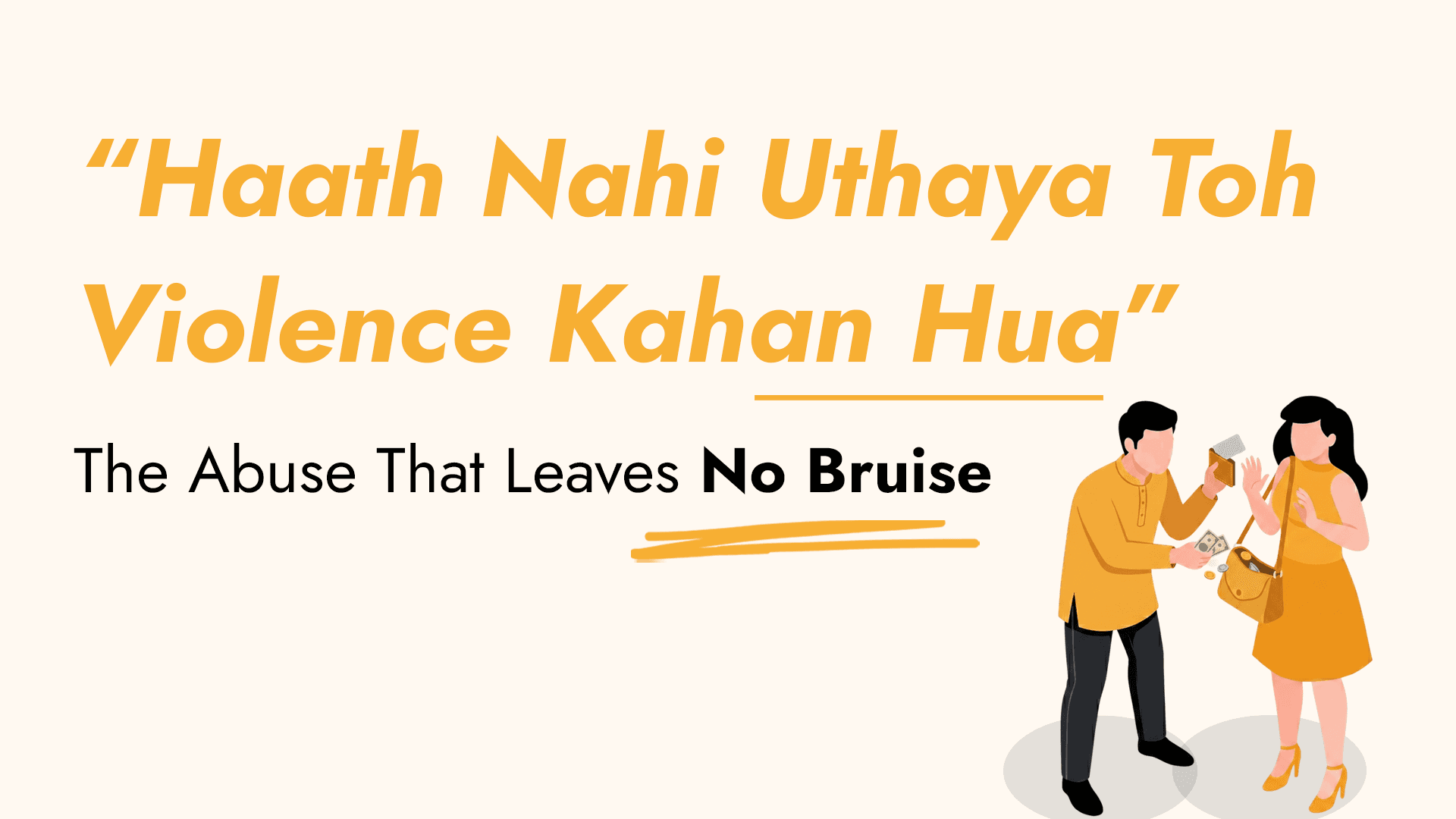
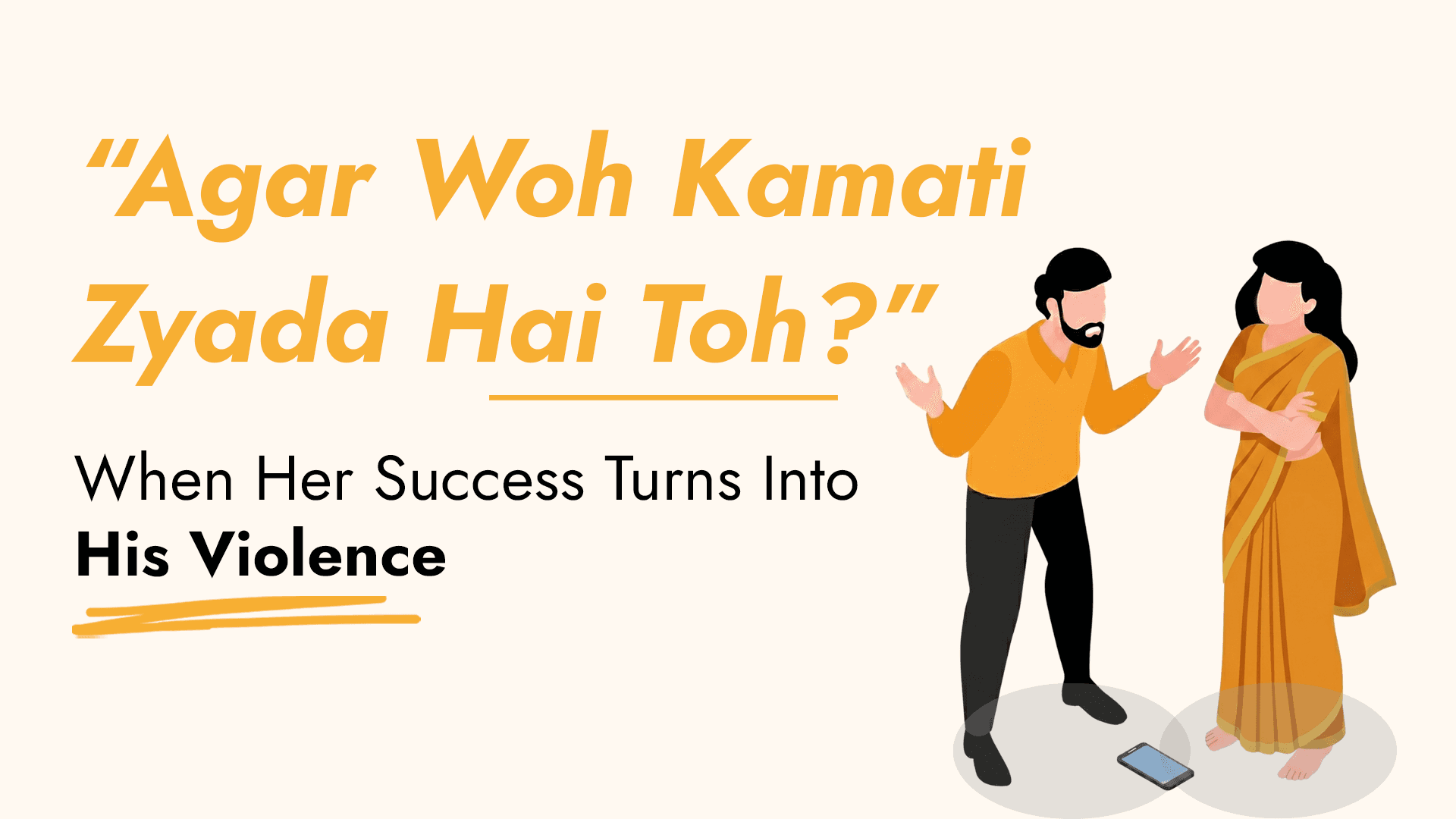
Let's talk about money. Does she earn, but her salary goes into your account? Does she need to ask you before buying something for the house, while you buy what you want without checking with anyone? Have you ever called her salary "our money" but never applied the same label to yours? Does she have her own savings, or does she not have "permission" to save independently? Financial control in a marriage is not household management. It is economic abuse. The DV Act 2005 recognises it as domestic violence, whether or not a single slap has been delivered.
If both of you earn but only one person decides how the money is spent, that is not partnership. That is power.
Now let's talk about anger. Have you broken things when angry, a phone, a glass, a door, a remote? Have you punched a wall during an argument? You will say, "I didn't hit her, I broke a thing." But think about it from where she is standing. When someone punches a wall right in front of you, do you feel safe? That punch is on the wall, but the message is for her. And the message is: look what I am capable of doing. She understood the message, and she is afraid.
Breaking things is not violence. It is a rehearsal for violence. Aur woh rehearsal usne dekhi. Aur woh darr gayi.
Have you ever screamed at her and then said, "you provoked me so much that I had to shout"? Have you pointed out her mistakes to cover up your own? Do you tell her, "nobody else has a problem with me, the problem is inside you"? All of this has a name. It's called gaslighting. It is a pattern in which you make her doubt her own experience, memory, and perception. Dheere-dheere, she stops trusting herself. She starts believing maybe he's right. Maybe I am the problem. That is the entire point of gaslighting, it doesn't break the body. It breaks the person's relationship with their own mind.
When someone starts doubting their own judgement about everything, it means someone deliberately and repeatedly planted that doubt.
There is another pattern that many men recognise but won't accept. The anger comes. Things happen, shouting, breaking, threatening, maybe worse. Then remorse arrives. "Sorry." Good behaviour follows, for a few days, maybe a few weeks. Flowers, affection, promises. Then the tension slowly builds again. Then the explosion happens again. Then "sorry" again. This is a cycle, tension, explosion, remorse, honeymoon, tension again. It is one of the most well-documented patterns in IPV research worldwide. And it does not stop on its own. It stops when you recognise it as a cycle, accept it as a problem, and consciously decide to break it. "Sorry" is a word. Change is a process. And that process does not happen alone.
If you say sorry after every fight but the fights keep recurring, your sorry is not working. You need professional help.
If you have read this far and seen something of yourself in these paragraphs, that recognition is a good thing. Serious. The biggest problem is not recognising the behaviour for what it is. Many men genuinely do not know that what they are doing qualifies as abuse, because nobody ever told them. Society taught them that a husband's control is normal and that keeping your wife "in line" is a responsibility. Ki gussa dikhana masculinity hai. All of that is wrong. And all of it can be changed. Professional help exists, couples counselling, anger management programmes, and individual therapy with a trained psychologist. Here is one more question. Did this happen in your house growing up too? Did you watch your father do the same things to your mother? If yes, then you are repeating a cycle that was handed to you. You didn't choose it. But you can choose to end it. Your children are watching you the way you once watched your father. The template stops with you, or it travels to them.
Asking for help is not a weakness. Weakness is knowing something is wrong, and doing nothing about it. Pehla qadam yeh hai: accept karna ki problem hai. Baaki sab uske baad hoga.
TSSF strives to build an environment of equity and addressing intimate partner violence of any type is a critical first step - we are with you - please do call us at 044-28363200 or email us at info@sunitisolomon.org
#IntimatePartnerViolence #DomesticViolenceAwareness #EmotionalAbuse #Gaslighting #EconomicAbuse #ControllingBehaviour #ToxicMasculinity #HealthyRelationships #BreakTheCycle #MensMentalHealth #RelationshipAwareness #StopDomesticViolence #PowerAndControl #AbuseIsNotLove #RespectInRelationships #AccountabilityMatters #EndTheCycle #EmotionalSafety #AngerManagement #TherapyMatters #PartnershipNotControl #ListenAndReflect #MenCanChange #ViolenceAwareness #UnlearnPatriarchy #RelationshipRedFlags #SupportSurvivors #HealingStartsHere #TSSF #SocialChange