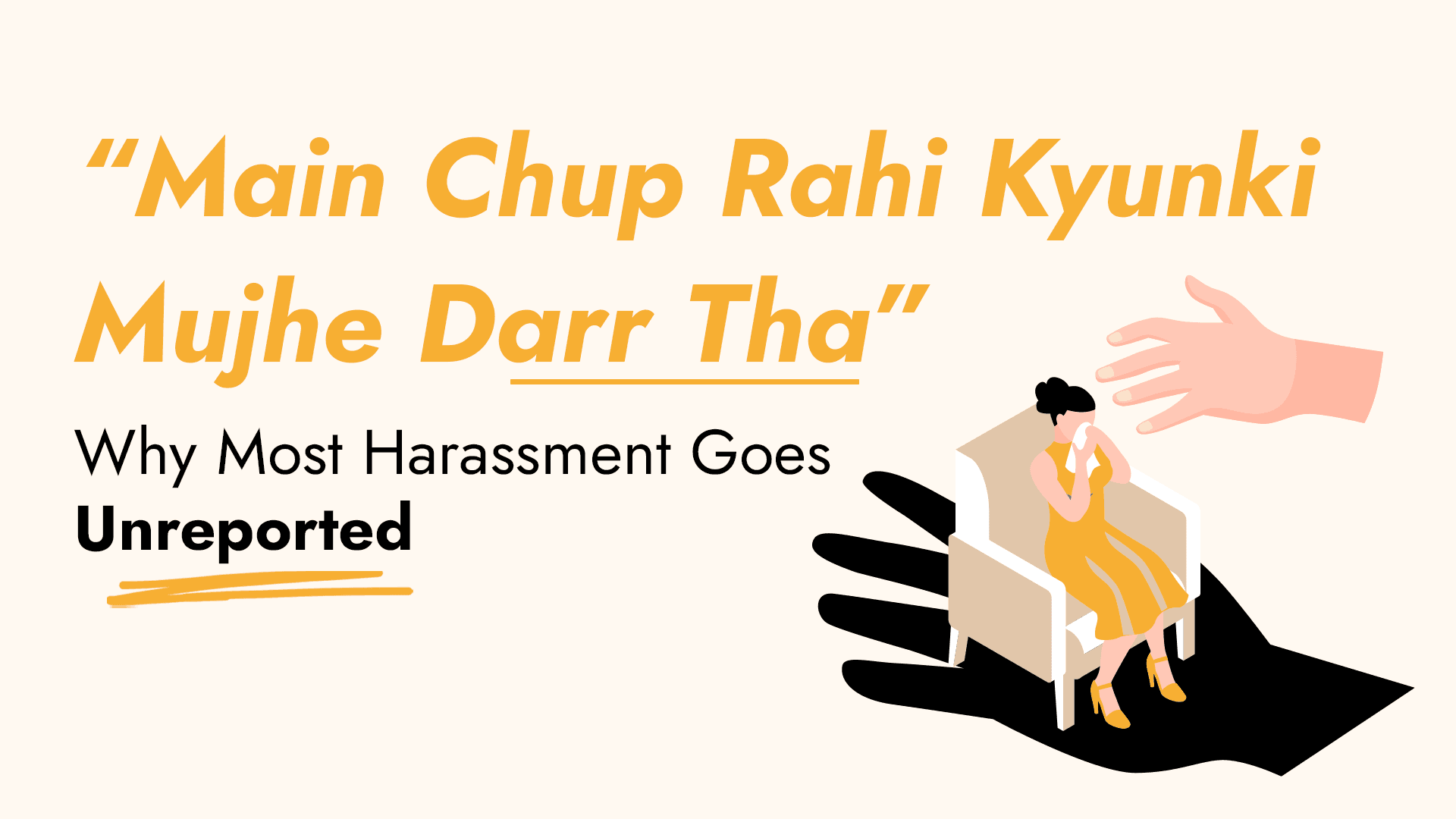
She did not report it. Not because it was minor. Not because she was confused about what happened. She did not report it because she could not afford to lose her job. Because the harasser was two levels above her. Because the HR head played golf with him. Because the last woman who spoke up received a glowing recommendation letter and a quiet exit.
Main chup rahi kyunki mujhe darr tha. That fear was not irrational. It was well-founded.
Sochne wali baat: When silence is the rational choice, the system is the problem, not the woman who went quiet.
Over 70 per cent of workplace sexual harassment in India goes unreported. That figure is not a mystery. It is an indictment. Women stay silent not because they lack courage, but because the cost of speaking is calculated, examined, and found to outweigh the cost of enduring.
Consider what reporting requires. You name your harasser, often someone senior, well-connected, or popular. You describe what happened in detail to a committee that may include people you do not know or trust. You continue to sit in the same office, attend the same meetings, and share the same pantry while the investigation crawls along. And you bet your professional reputation on a system that has historically protected the institution before the individual.
Ek minute ruko: She is not being asked to file a complaint. She is being asked to gamble her career on a system she has no reason to trust. Would you take that gamble?
The social cost is equally punishing. In India, a woman who reports harassment is often recast as the problem. She is too sensitive. She misunderstood. She is doing it for attention. Her character is scrutinised more than the incident itself. The complaint becomes her trial.
Then there are the grey areas that breed self-doubt. The WhatsApp message that was suggestive yet could be explained as casual. The late-night phone call that was not explicitly sexual but felt invasive. The standing-too-close at a team dinner that happened once and never again. Women second-guess themselves into silence: Was it really that serious? Am I overreacting? If I report this, will anyone believe me?
What would change this? Not just better laws, better leadership. Companies where the CEO undertakes POSH training alongside interns. Organisations where the ICC is competent, independent, and trusted. Workplaces where the person who reports is protected with the same energy that goes into protecting the company's reputation.
Think about this: She is not asking the system to guarantee a result. She is asking it to guarantee that she will not be punished for using it. That is the minimum, not the maximum.
A Word for Parents
If your daughter never told you about something at work, it may not be distrust. It may be protection, of you, from worry. Or it may be fear, of your reaction. Create a space where she can bring you difficult things without fear of judgement. Not a courtroom. A living room. That distinction will decide whether she ever opens up.
Ruk ke socho: Your reaction when she speaks will echo for years. Make it one worth remembering.
TSSF team is eager to hear from you, write to us at info@sunitisolomon.org or call us at 044-28363200.
#WorkplaceHarassment #SexualHarassmentAwareness #POSHAct #SpeakUp #SafeWorkplaces #WomenAtWork #KnowYourRights #BreakTheSilence #WorkplaceSafety #BelieveWomen #CorporateCulture #EndWorkplaceHarassment #WomenRightsIndia #HarassmentAtWork #SupportSurvivors #GenderEquality #ProfessionalBoundaries #ToxicWorkplace #EmployeeRights #PsychologicalSafety #ICC #SheBox #RespectAtWork #LeadershipMatters #StopVictimBlaming #WomenEmpowerment #SafeSpaces #TSSF #SocialChange #AwarenessMatters