Knowing you have rights matters. Knowing how to use them changes everything. The gap between "I should report this" and "I actually reported this" is filled with fear, unanswered questions, and a hundred scenarios your mind invents at 3 AM.
So let us walk through it, step by step. No jargon.
Sochne wali baat: You do not need all the answers before you start. You just need to know where to begin.
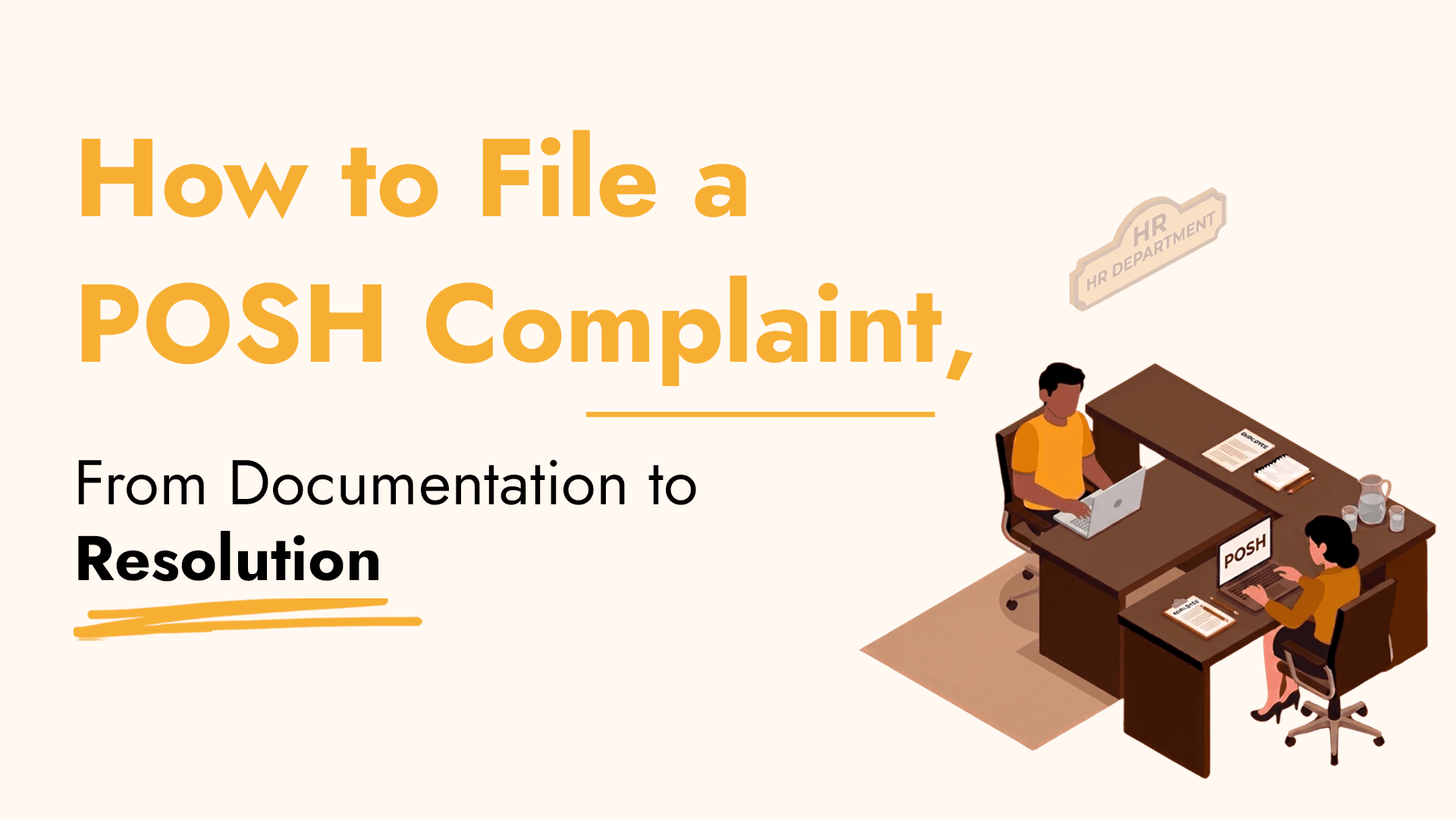
Step one: document. From today. Even if you are not sure you want to file, save every message, WhatsApp, email, Slack, text. Take screenshots and store them outside your work device. Note dates, times, and locations. Write down what was said or done, and how it made you feel. If there were witnesses, record their names. Do this the same day, if possible, because details fade quickly and memory is unreliable under stress.
Step two: identify your ICC. Ask HR. Check your employee handbook or the company intranet. The ICC should have at least four members, including an external member with an NGO or legal background. If your organisation has no ICC, that is illegal, you can approach the Local Complaints Committee at the district level or file through SHe-Box.
Step three: submit a written complaint. You have three months from the date of the incident, or from the most recent incident if it was ongoing. The complaint should describe what happened, when, where, and who was involved. Legal language is not required. Clarity and honesty are essential.
Zara sochiye: Your complaint does not need to sound like a court filing. It needs to sound like you, telling the truth.
Can you file anonymously? The POSH Act does not formally permit anonymous complaints. Your identity will be known to the ICC. However, the Act requires strict confidentiality, the identities of the complainant, respondent, and witnesses must not be disclosed. If this confidentiality is breached, it constitutes a separate violation carrying its own penalty.
Can you file a complaint after leaving the organisation? The Act technically expects complaints during employment. However, courts have increasingly accepted complaints filed shortly after resignation when the incident occurred during employment. If you have recently left and the wound is fresh, consult a lawyer or a women's rights organisation for advice specific to your situation.
What happens after you file? The ICC must complete its inquiry within 90 days. During this period, you can request interim measures: transfer of either you or the respondent, leave, or a change in seating arrangement. These are rights, not favours. The inquiry process involves both parties being heard, evidence being examined, and witnesses being called. The ICC then submits its findings and recommendations to the employer.
Emotionally, this process is draining. Working alongside the person you reported while the investigation unfolds requires fortitude most people should not have to muster. Lean on people you trust. Consider speaking to a counsellor. Keep your documentation secure. And remind yourself, as often as needed, that you are not causing trouble. You are addressing it.
Think about this: Filing a complaint is not starting a fight. It is refusing to accept a wrong committed by someone else.
A Word for Parents
If your daughter tells you she has been harassed at work, the first thing she needs to hear is not "Leave that job" and definitely not "What did you do?" What she needs is: "I believe you. What do you want to do?" Support her decision, whatever it is. Help her document the harassment. And if she chooses to file, be the anchor she comes home to.
Here is what remains: She is not causing trouble. She is standing up. That is what you raised her to do.
TSSF team is eager to hear from you, write to us at info@sunitisolomon.org or call us at 044-28363200.
#POSHAct #KnowYourRights #WorkplaceHarassment #SexualHarassmentAwareness #SafeWorkplaces #WomenAtWork #POSHAwareness #SpeakUp #WorkplaceSafety #ICC #SheBox #EmployeeRights #WomenRightsIndia #LegalAwareness #EndWorkplaceHarassment #SupportSurvivors #DocumentEverything #BelieveWomen #ProfessionalBoundaries #CorporateCulture #SafeSpacesAtWork #GenderEquality #WorkplaceEthics #WomenEmpowerment #HarassmentIsNotYourFault #StandUpSpeakOut #RespectAtWork #TSSF #SocialChange #AwarenessMatters