Here is a scene that plays out in Indian offices every day. A senior colleague makes a comment about a woman's outfit in a meeting. The room goes quiet. Someone offers an uncomfortable smile. Everyone suddenly finds their phones very interesting. The moment passes. Nobody says a word.
That silence is not neutral. It is a vote. And it votes in favour of the person who crossed the line.
Sochne wali baat: Silence in the room tells the harasser he is safe and the woman she is alone. Both messages are received instantly.
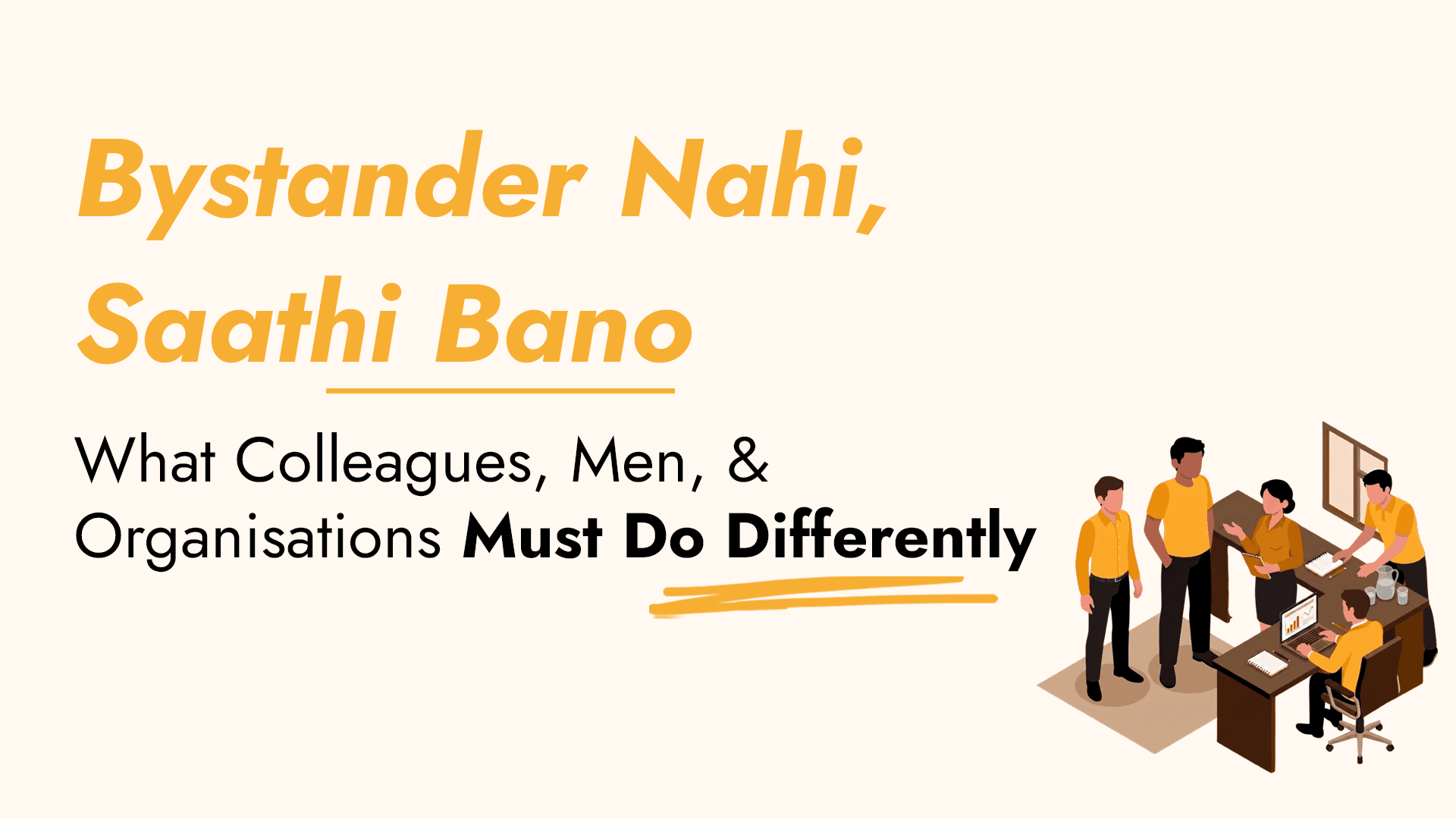
The POSH Act places the burden of complaint on the woman who was harassed. But the burden of culture, of creating a workplace where harassment does not thrive, belongs to everyone, including colleagues, managers, HR leaders, and, critically, men, who set most of the cultural norms in Indian workplaces. Not by policy. By practice.
Most men at work are not harassers, but many are bystanders. They see things. They hear things. They know which colleague's behaviour makes women uncomfortable. And they stay quiet. Not because they approve, but because they do not know what to say, or because they convince themselves it is not their place to say anything.
It is your place. Here is how.
Ek minute ruko: Being an ally is not about a grand gesture. It is about small, specific actions in real moments. Here are three you can use tomorrow.
One: in the moment, say something direct. "That comment was not okay" or "Let us keep this professional" is enough. You do not need to deliver a speech. A short sentence disrupts the dynamic. Two: after a meeting that felt uncomfortable, check in with the person who was targeted. "Are you alright? That felt off to me too" costs you nothing and reassures her that she is not imagining things. Three: refuse to laugh at jokes that target someone's body, appearance, or personal life. Your laughter is your endorsement. Withdraw it.
If a colleague tells you she has been harassed, here is what she needs: belief. Not an interrogation about her clothing or whether she provoked it. Not legal strategy unless you are a lawyer. Ask her what she wants to do. Offer to accompany her if she decides to report. And keep what she shares confidential. She chose you for a reason. Honour that.
Organisations have responsibility beyond posting a policy on the intranet. An ICC that exists on paper but never acts is worse than no ICC at all, as it creates an illusion of safety. Mandatory annual training, not a one-hour tick-box exercise but a genuine conversation about behaviour, power, and consequences. Leadership that models the standard. Anonymous feedback mechanisms. And consequences that are applied consistently, regardless of the respondent's seniority or revenue contribution.
Think about this: Culture is not built by what is written on the wall. It is built by what happens when the policy is tested and the room is watching.
A Word for Parents
If you have a son entering the workforce, talk to him about POSH, not as a warning to behave, but as a responsibility to stay aware. Teach him to be the colleague who speaks up when something is wrong. The man who does not forward the inappropriate joke. The teammate women trust.
Here is what stays: The next generation of safe workplaces will not be built by law alone. It will be built by men who refuse to be spectators. Raise that man.
TSSF team is eager to hear from you, write to us at info@sunitisolomon.org or call us at 044-28363200.
#POSHAct #WorkplaceHarassment #SpeakUpCulture #SafeWorkplaces #BystanderIntervention #Allyship #WorkplaceSafety #WomenAtWork #KnowYourRights #GenderEquality #RespectAtWork #CorporateCulture #EndWorkplaceHarassment #LeadershipMatters #ProfessionalBoundaries #BelieveWomen #MenAsAllies #ICC #POSHAwareness #EmployeeRights #SupportSurvivors #InclusiveWorkplaces #SafeSpaces #HarassmentFreeWorkplace #StopNormalisingHarassment #AccountabilityMatters #WorkplaceEthics #TSSF #SocialChange #AwarenessMatters